
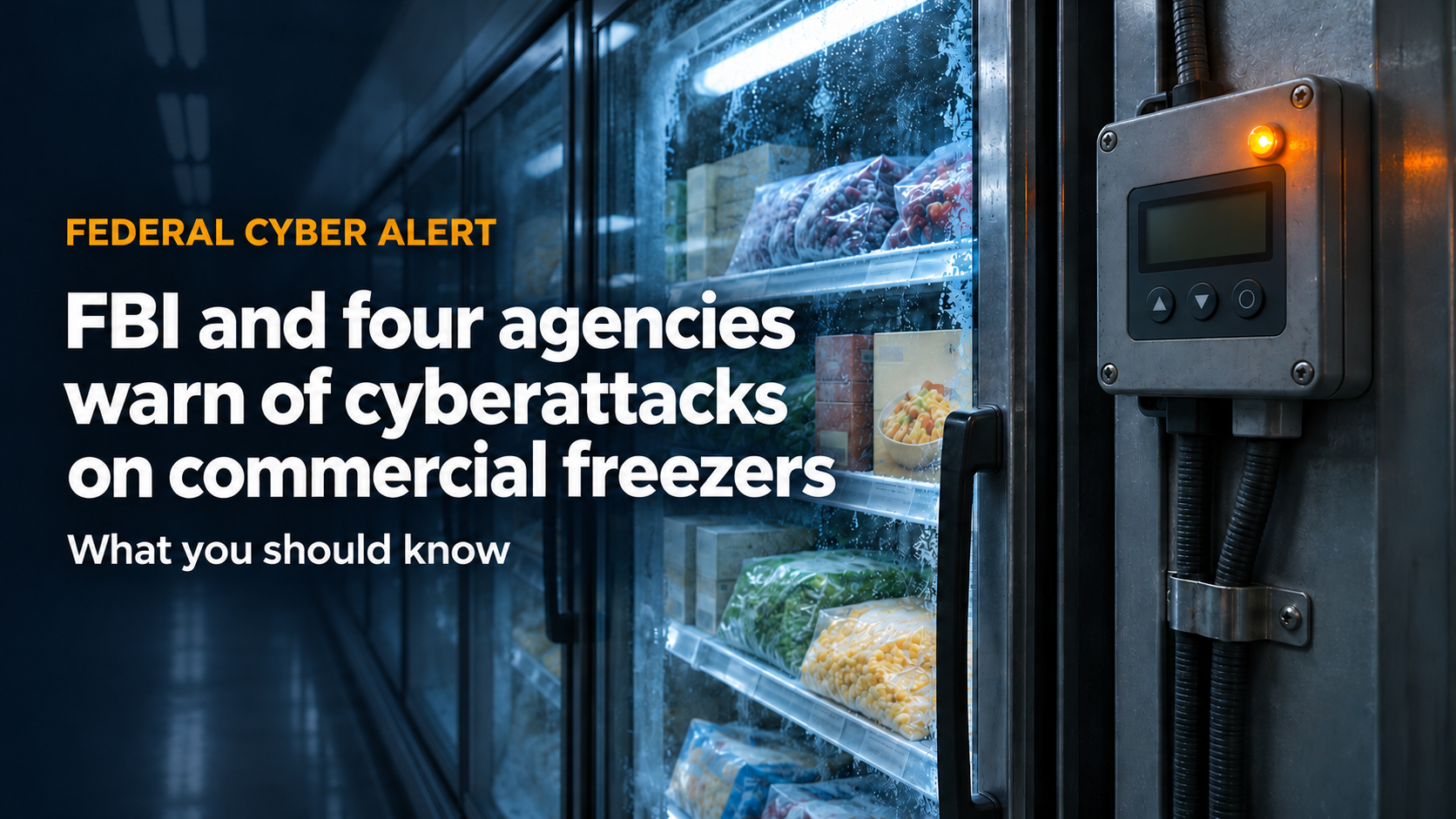
FBI and Four Agencies Warn of Cyberattacks on Commercial Freezers: What Connecticut Should Know
Five U.S. agencies warn grocery stores, cold storage operators and health care facilities to secure refrigeration systems after European supermarkets discarded food following remote cyberattacks.
European supermarkets threw away food this week after hackers remotely raised the temperature of commercial refrigerators and freezers. Three days after the Nov. 2 attacks, the FBI and four other U.S. agencies warned that industrial refrigeration systems were being targeted around the world.
The Nov. 5 advisory came from the FBI, the Cybersecurity and Infrastructure Security Agency and the U.S. departments of Health and Human Services, Agriculture and Transportation. The agencies urged operators to act immediately to protect the electronic controls used to monitor temperatures and manage refrigeration in grocery stores, warehouses and refrigerated transport.
From supermarket freezers to blood banks
At an ICA supermarket in Stockholm, a manager told Reuters that the store’s freezers reached 122 degrees Fahrenheit and that staff did not discover the problem for hours. Grocery stores in Belgium and Luxembourg also reported disruptions. The incidents followed an October attack in which France’s national cybersecurity response center documented numerous breaches of remote refrigeration controls. It remained unclear who carried out the November attacks or whether they were linked to the October incident.
The FBI said attackers also targeted refrigeration at three French national blood service sites. Staff responded to temperature alarms in time to prevent any loss of blood supplies. In the United States, Reuters reported that Pentagon investigators were treating a series of August refrigeration failures at grocery stores on military bases as a cyberattack.
What federal officials want operators to do
The federal advisory warns that intruders can change temperature settings or interfere with the readings that staff use to check whether products are being stored safely. Food can spoil, and products kept at unsafe temperatures can harm consumers if they are sold and eaten.
The agencies urged operators to remove refrigeration controls from the public internet, install security updates and change factory passwords. They also called on operators to set safe temperature limits and make sure alarms reach people who can respond.
What Connecticut households should know
The federal advisory did not identify a Connecticut incident, predict a grocery shortage or tell households to stock up. The Connecticut Department of Public Health has separate guidance for emergencies generally. It recommends keeping at least three days of food that requires neither refrigeration nor cooking as part of a home emergency kit.
Sources
- Joint federal advisory (FBI, CISA, HHS, USDA, DOT)
- French national cybersecurity response center alert
- Reuters reporting on the European supermarket attacks
- FBI video and transcript
- Reuters reporting on the federal warning and military base investigation
- Connecticut Department of Public Health emergency preparedness guide