
Connecticut Under Investigation
Democrat, Republican or Independent: Why Does Social Security Tax Every Dollar of Your Pay, but Only Part of a Million-Dollar Salary?
By Isabel Calione · October 27, 2026
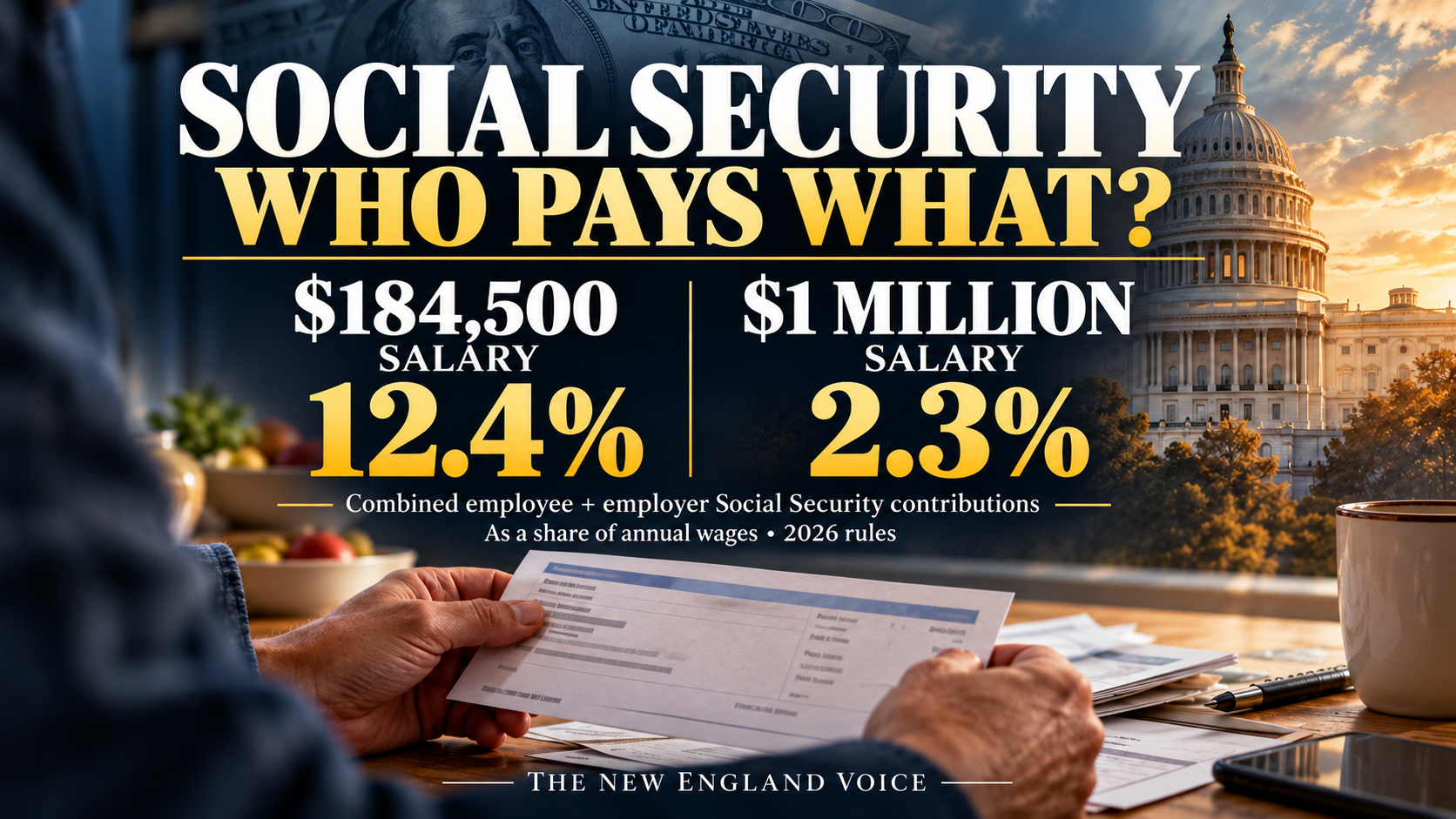
Whether you vote Democrat, Republican or Independent, this question affects your paycheck: Why does a worker earning $60,000 contribute to Social Security on every dollar of wages, while someone earning $1 million stops contributing after the first $184,500?
That is how the federal Social Security tax works in 2026. Employees contribute 6.2% of covered wages, and employers contribute another 6.2%. Once annual wages reach $184,500, the Social Security tax stops — even when the employee continues earning hundreds of thousands of dollars more.
The difference came into focus during a March 25 Senate Budget Committee hearing, when Senator Patty Murray questioned Molly Dahl, chief of long-term analysis at the Congressional Budget Office, about the share of earnings workers contribute.
Dahl explained that economists generally view the employer's contribution as a cost ultimately borne by workers through compensation. Counting both contributions, the Social Security tax equals 12.4% of covered wages below the cap.
The numbers show what happens above that limit. A worker earning $60,000 contributes $3,720, with an equal employer contribution. A worker earning $1 million contributes $11,439, also matched by the employer. The combined contribution represents 12.4% of the first worker's wages but approximately 2.3% of the million-dollar salary. These calculations follow the IRS's 2026 rates and taxable maximum.
The higher earner contributes more dollars, but a smaller percentage of total wages.
"That does not seem to me like a very fair system," Murray said during the hearing.
These percentages describe Social Security contributions, not a person's total tax bill. Federal income taxes are separate. Medicare taxes also continue above the Social Security earnings cap, with an additional Medicare tax applying above certain income thresholds.
The debate comes as Social Security faces a significant funding gap. According to the 2026 trustees' report, the retirement and survivors trust fund is projected to exhaust its reserves in the fourth quarter of 2032. At that point, continuing revenue would cover approximately 78% of scheduled benefits — a 22% shortfall — unless Congress changes the law. That does not mean Social Security would disappear, but it means its existing financing would be insufficient to pay full scheduled benefits.
For workers and retirees across political parties, the issue raises a direct question for Congress: As lawmakers decide how to protect benefits, should the limit on wages subject to Social Security taxes remain?
Original Sources
- Senate Budget Committee: March 25, 2026 hearing and testimony
- Senator Murray's office: Published exchange with Molly Dahl
- IRS: Social Security and Medicare withholding rates — irs.gov
- Social Security Administration: 2026 trustees' report summary — ssa.gov
Isabel Calione
Founder and Editor, The New England Voice. Author and community journalist covering Connecticut and New England.