
Working Overtime — Why Is Connecticut Still Taxing It?
Federal law now offers deductions for overtime and tips. Connecticut has not matched them. Workers deserve a clear answer about why.
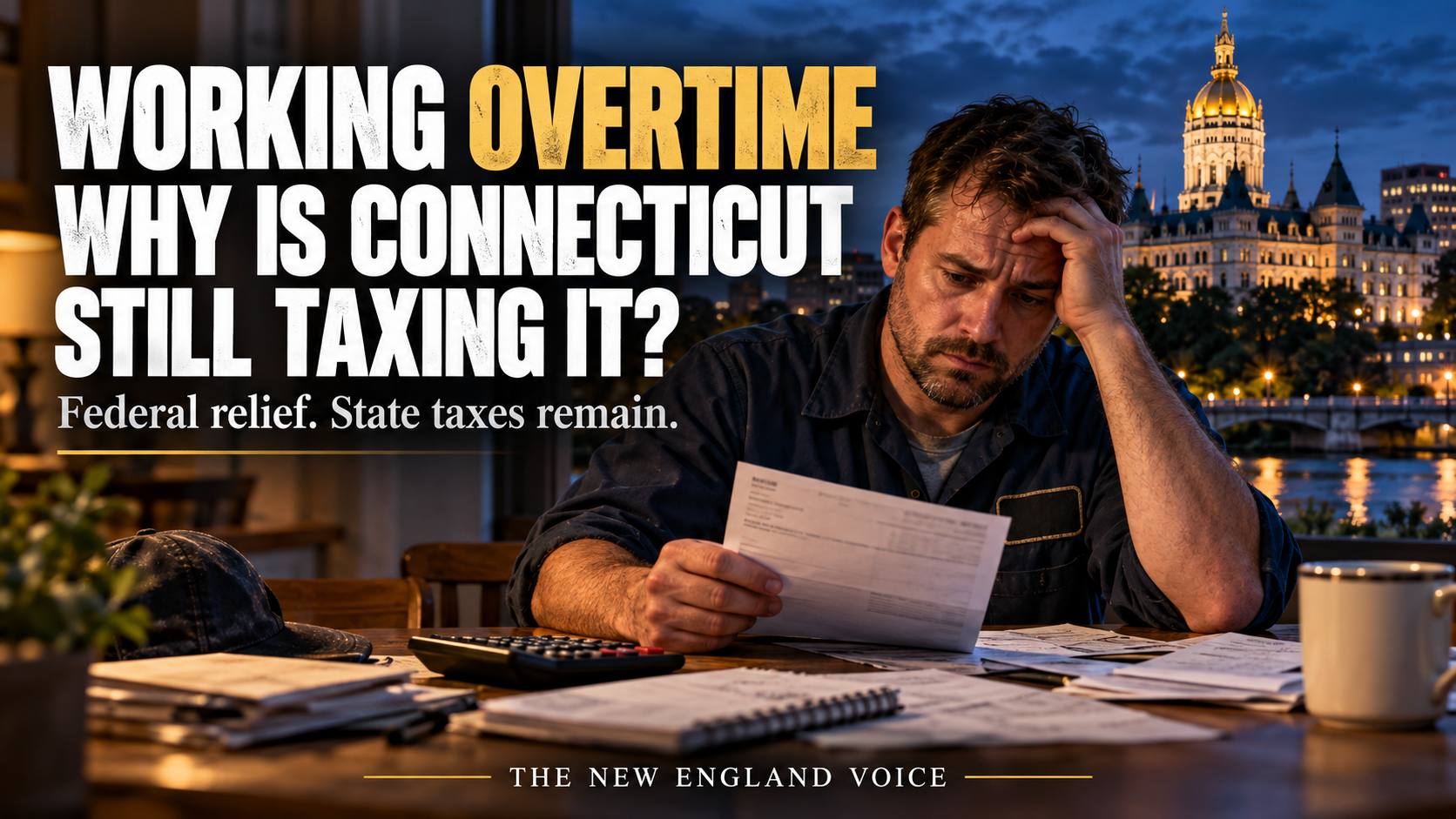
For many families, overtime means less time at home. It means another shift, another evening away from the children, or another weekend at work. Tips can also be an important part of a worker's income.
So when workers hear "no tax on tips" and "no tax on overtime," they want to know: Does that help me?
The answer in Connecticut has two parts.
What the Federal Law Does
The federal law signed by President Trump in July 2025 created deductions for qualified tips and overtime. Eligible Connecticut workers can claim those federal deductions. Governor Ned Lamont does not have to approve that federal benefit.
But Connecticut has not adopted matching deductions for its own income tax. That means workers can receive federal relief while those earnings remain taxable on their Connecticut return.
The Limits of the Deduction
It is a deduction with limits and eligibility rules — not a blanket removal of every tax from every paycheck.
For qualified tips, the maximum annual deduction is $25,000. For qualified overtime, it is $12,500, or $25,000 for a married couple filing jointly. Higher incomes can reduce the deductions. These provisions apply from 2025 through 2028.
The overtime deduction covers the extra pay above the regular rate that federal law requires. Here is a simple example: if your regular pay is $20 an hour and qualifying overtime pays $30, the potentially deductible part is the extra $10 — not the entire $30.
Social Security and Medicare taxes still apply.
What Connecticut Has Not Done
State lawmakers introduced proposals this year, including House Bill 5051. Its official record shows a referral to the Finance Committee, not passage into law.
That does not establish that Governor Lamont vetoed it. The legislature also has responsibility for changing state tax law.
To be fair, Connecticut has approved other income-tax cuts and expanded its earned income tax credit under Lamont. Those measures deserve recognition. But they do not answer this specific question.
Questions for the Governor and Legislature
Do you support state tax relief for workers earning tips and qualifying overtime?
If not, why not?
How much would it cost, and what would that money otherwise pay for?
Could Connecticut offer targeted relief to workers with lower or middle incomes?
A state has bills to pay. So do its residents. Workers deserve a clear explanation of the choices being made — and whether another approach could help them keep more of what they earn.
Sources: Federal overtime and tip deduction rules (Tax Cuts and Jobs Act extension, July 2025); Connecticut House Bill 5051 legislative record; Connecticut Department of Revenue Services; earlier Connecticut income-tax relief measures under Governor Lamont.